
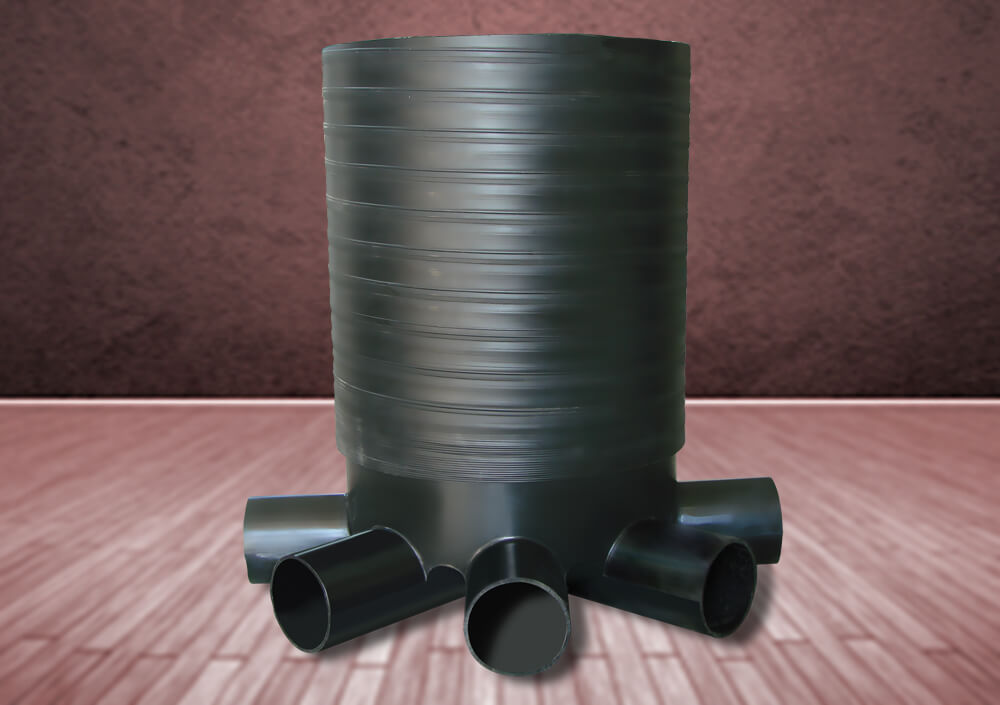
A well-maintained drainage system with zero blockages is vital for a seamless drainage system. For this, an efficient inspection chamber is required to perform the evaluation. This crucial tool must meet specific legal and industry regulations to clear drain pipes.
Parts of an inspection chamber
The inspection chamber comprises a base, riser, and cover. The bottom or base connects the pipes and sits below; the riser is a vertical section that is placed on top of the base – this is secured using rubber seals; the cover to the chamber, also called the manhole cover, is above the surface, and inhibits all unauthorised access to the chamber.
Installation
While the installation of the inspection chamber depends on its size, here are some guidelines to give you an idea.
When installing an inspection chamber, you must follow all safety regulations and make sure that the chamber is placed at the right depth. Always comply with the guidelines. Alternatively, speak to experts at Polycon.
Typically, there are two sizes – 320mm and 450mm in diameter. The larger chamber of 450mm can be installed at a depth of 1.2m and can even go further down to 3m with a restricted access cover, while the smaller one at 320mm can go no more than 600mm deep. The drain rod becomes impossible to bend if you push the smaller one any further.
The need for an inspection chamber
First, all drainage work must be visualised through a camera and needs drain rods. At this point, you must assess the number of inspection chambers required to achieve this.
There’s a straight run pipe over 22 metres; you will need an inspection chamber.
Multiple drain pipes connected at a single point must be evaluated via an inspection chamber when two or more pipes meet at an angle of> 45 degrees.
An inspection chamber must be installed when the direction of the pipework changes to an angle > 30 degrees or when a large bend causes clogging.
You will also require an inspection chamber when two interconnected pipes are made of